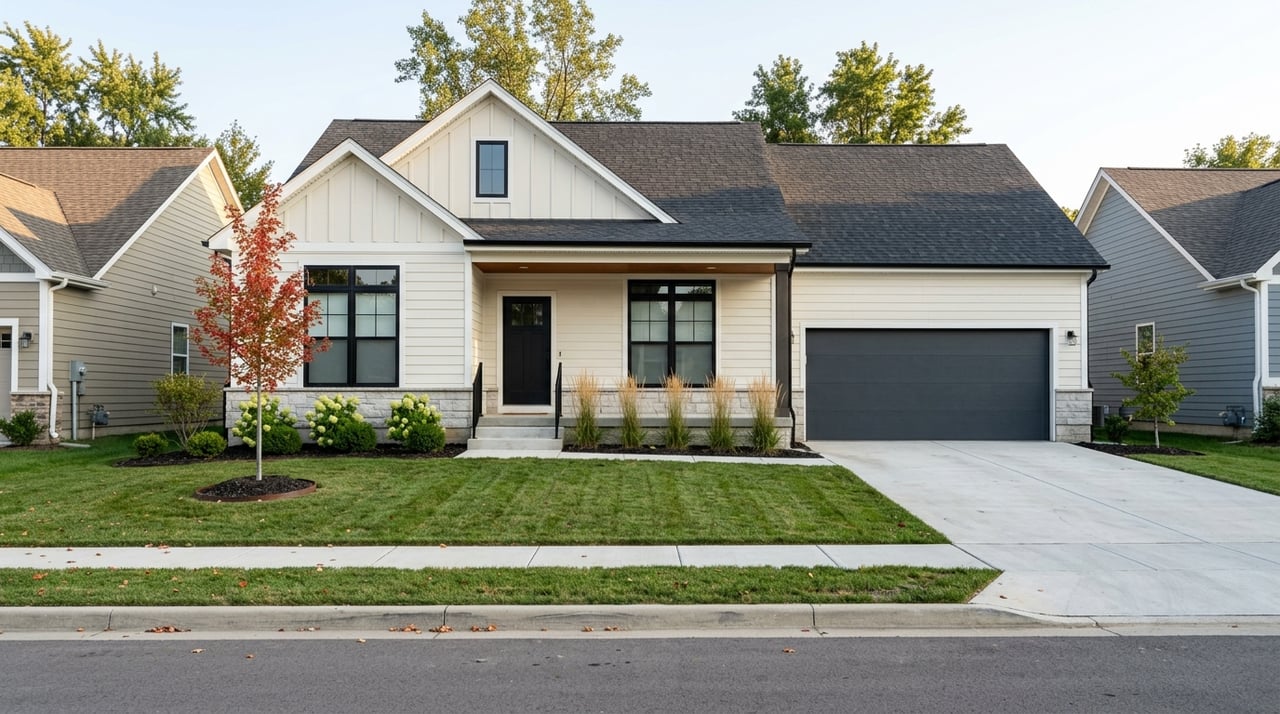
Navigating New Construction And Subdivisions In The Village Of Harris
July 2, 2026
July 2, 2026
Thinking about building instead of buying resale in Harrison? You are not alone. With the Village of Harrison growing quickly and adding new subdivisions, new construction can be an appealing way to get a newer home, modern layout, and a neighborhood that is still taking shape. The key is knowing how to compare builders, lots, timelines, and costs before you commit. Let’s dive in.
Harrison is in a growth phase, and that has real impact on your home search. The village’s 2025 comprehensive plan reports 15,384 residents in 2024, up from 12,418 in the 2020 Census, with projections reaching 21,675 by 2050.
Housing data supports that trend. The plan reports 4,695 housing units in 2022, a 4.7% vacancy rate, 4,018 owner-occupied units, and 458 renter-occupied units. It also notes that 54.6% of homes were built after 2000, which helps explain why newer homes and developing subdivisions are such a major part of the local market.
Village activity in 2024 adds even more context. Harrison reported approval of six new subdivisions in 2024 totaling 147 residential and commercial lots, along with 108 new single-family residential permits. The village also reported an average new-home price of $444,600.
For you as a buyer, that means there may be meaningful opportunities in both completed neighborhoods and communities still moving through the pipeline. It also means you need to look beyond the model home and understand where each subdivision stands in the approval and build process.
A polished model and a friendly sales office only tell part of the story. Before you move forward, compare builders based on their track record, process, and communication style.
A practical starting point is to ask about:
This matters because two builders can offer similar floor plans but deliver very different experiences. One may be flexible with changes and updates, while another may have stricter rules and less room for customization.
In Wisconsin, you can also verify credentials instead of relying only on sales conversations. The Wisconsin Department of Safety and Professional Services says a person cannot obtain a building permit for a one- or two-family dwelling without the proper Dwelling Contractor certification or restricted certification, along with a Dwelling Contractor Qualifier requirement. That gives you a concrete way to check whether the builder or contractor is properly credentialed for the work.
Choosing a builder is only half the decision. The subdivision itself can shape your day-to-day experience just as much as the home design.
Harrison’s Planning & Development Department oversees subdivision plats, land divisions, rezoning, planned developments, site plans, and related approvals. The village also posts newly proposed developments for a 30-day public review period and accepts public comments by email.
That process is useful if you are trying to answer questions like these:
If a community is being marketed before it is fully build-ready, your timeline may look different than you expect. A lot that sounds available today may still be moving through approval steps before construction can begin.
Not all lots are equal, even within the same subdivision. Price and size matter, but they should not be your only filters.
Harrison says its land-division review process is meant to support orderly growth by considering safe traffic circulation, proper ingress and egress, adequate light and air, avoidance of overcrowding, protection of vegetation, and adequate, economical public improvements like water and sewage. In simple terms, the village is looking closely at how a neighborhood functions, not just how it looks on a map.
That is a strong reminder to compare lots based on practical use. A lot may look great on paper but have grading, drainage, or access details that affect how the home sits on the site and how the yard functions later.
When you compare lots, pay attention to:
Harrison’s residential new-construction packet requires building plans, a site plan, elevations, grading and drainage details, and references erosion control, water and sanitary permits, and a wetland notice. The packet also says that if final grades are not complete before occupancy, a grading permit and escrow may be required.
That means a cheaper lot is not always the better value. If the site creates more complexity for grading, drainage, or build placement, your overall cost and timeline can shift.
In a growing area, timing can be one of the biggest surprises for buyers. A subdivision may feel active, but that does not always mean every lot is ready for immediate construction.
Harrison’s land-division materials say preliminary plats must be submitted at least 21 days before the Plan Commission meeting where action is requested. Final plats must then be submitted within six months of preliminary plat approval, and approval remains valid for signatures for six months before expiring.
For you, the takeaway is simple: ask exactly where the lot is in the process. If approvals, final plat steps, or site-prep work are still pending, your move-in date may depend on more than the builder’s schedule.
New construction pricing can look straightforward at first glance. In reality, the number that matters most is often not the advertised base price.
Builders commonly use incentives to attract buyers. In 2025, national reporting showed that many builders were offering help such as closing-cost assistance, design credits, mortgage rate buydowns, and, in some cases, price reductions.
That means your best comparison is usually:
Base price + upgrades - incentives = more realistic cost
This is especially important when you are comparing two homes or two builders in Harrison. One community may advertise a lower base price, but another may include more standard features or stronger credits that improve the overall value.
Upgrades can change your budget fast. Items like flooring, cabinets, countertops, lighting, landscaping, and trim details often add up more quickly than buyers expect.
Before you sign, ask for a clear breakdown of what comes standard and what is considered an upgrade. Also ask what changes are allowed after contract, when design decisions are due, and whether pricing is locked in or subject to change.
This helps you avoid a common problem in new construction: falling in love with the model home and later realizing many of the finishes you liked were not included in the base price. A more informed comparison can help you decide whether to spend more upfront, keep selections simple, or prioritize the upgrades that matter most to your lifestyle.
A new home is still a home under construction, and inspections still matter. Just because a property is brand new does not mean every detail will be perfect.
Buyer guidance supports getting a home inspection on new construction, and industry guidance also recommends phase inspections during the build. Common checkpoints include after the foundation is poured, before drywall goes up, and at final punch-out before closing.
There is also value in a later inspection. An inspection around the 10- to 11-month mark can help you identify items to raise before a typical one-year builder warranty period ends.
Most new homes come with a builder warranty, but coverage can vary. The Federal Trade Commission says builder warranties usually cover permanent parts of the home, with common patterns such as one year for workmanship and materials, two years for systems like HVAC, plumbing, and electrical, and sometimes longer coverage for major structural defects.
It is also important to know that a builder warranty is not the same thing as a home warranty service contract. If a builder mentions warranty coverage, ask what is included, how claims are handled, what deadlines apply, and whether any third-party warranty company is involved.
A good rule is to get the warranty details in writing and review them before closing. That gives you a better sense of both protection and responsibility after move-in.
One of the most misunderstood parts of new construction is representation. The person staffing the builder’s model or sales office is there for the builder’s side of the transaction, not as your personal advocate.
In Wisconsin, a buyer’s agent can represent your interests directly. The Wisconsin REALTORS® Association explains that a buyer’s agent owes the buyer duties such as loyalty, disclosure of material information, negotiation services, and advice, while a selling agent represents the seller unless a buyer agency agreement says otherwise.
That distinction matters when you are comparing contracts, timelines, upgrades, incentives, and inspection issues. If you want someone focused on your side of the deal, it is smart to understand representation early rather than after you have already started conversations with a builder.
If you plan to build in Harrison, get your financing lined up as early as possible. A preapproval letter shows a lender is tentatively willing to lend up to a certain amount, and it can be an important step before an offer or contract is accepted.
You should also budget beyond the purchase price. Closing costs, moving expenses, taxes, insurance, home improvements, and possible homeowners association dues can all affect what feels comfortable for your monthly budget.
That broader planning matters even more in new construction, where upgrades and timeline changes can affect your cash needs along the way. A realistic budget helps you choose with more confidence and less stress.
New construction in Harrison can be a great fit if you want a newer home, a modern layout, and the chance to live in a growing community. The best results usually come from treating the process like more than a design decision.
When you compare builders carefully, study the subdivision approval stage, evaluate the lot itself, and understand pricing, warranty, inspection, and representation details, you put yourself in a much stronger position. If you want local guidance as you sort through new builds, resale options, or both, the team at Kelly Davies Homes Team, LLC is here to help you move forward with clarity.
Here at Kelly Davies Homes Team, we are dedicated to helping you find your dream home and assisting with any selling needs you may have. Contact us today to start your home searching journey!